




A friend of mine runs a small fabrication shop, and a few months back he said something that's stuck with me since. He said most of his callbacks, not all, but most, trace back to the same boring cause. Not a design mistake. Not bad materials. Just something that got measured wrong, or measured casually, early on, when nobody thought it mattered enough to double-check.
That's kind of a deflating explanation, honestly. You'd expect expensive failures to have dramatic causes. Usually they don't. Usually it's a scale that drifted a couple grams, or a temperature that was eyeballed instead of checked, and nobody found out until much later, when the finished thing didn't hold up the way it was supposed to.
"Close Enough" Looks Identical to Correct, Until It Doesn't
Every trade has some tolerance built in. A carpenter has room to be a little off. So does a landscaper, mostly. But there's always a point in the process, mixing something, curing something, weighing something out to spec, where that room disappears and the number just has to be right. And here's the annoying part: you can't tell the difference between "close enough" and "actually correct" at the moment. They feel the same. You find out later, sometimes way later, whether you guessed right.
I think that's why calibration gets skipped so often. It's invisible work. Nobody sees a properly calibrated scale and thinks "ah, good job." They only notice when a batch comes out wrong and someone has to figure out why. A shop that doesn't check its scales regularly isn't necessarily doing anything wrong today, it's just trusting that nothing has shifted since the last time anyone actually confirmed it. Which, over time, is a bad bet to keep making.
Temperature Gets Underestimated Even More Than Weight
If I had to guess where most of these quiet failures actually come from, I'd put temperature ahead of weight. So much depends on staying in a specific range, curing, mixing, finishing, storage, and so many people verify that range with nothing more than a hand near the surface or a rough sense of "feels about right."
A couple degrees off doesn't sound like much. But materials cure at different rates depending on temperature, reactions speed up or slow down, and things that are supposed to hold a certain shelf life or structural strength end up quietly compromised. Nobody notices at the moment. That's the whole problem with it.
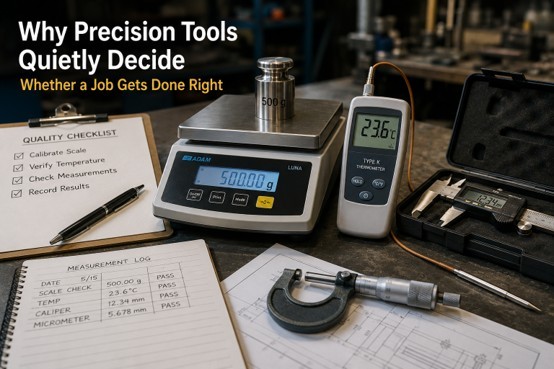
This is where decent equipment actually earns its cost, and it's a bigger gap than people expect, a pocket thermometer someone's had in a drawer for six years behaves very differently from something built for consistent readings under real working conditions. If you want a sense of where that range actually sits, it's worth glancing through something like this collection of digital and lab-style thermometers, mostly just to see how much variation exists in what "accurate" even means depending on the tool.
Why Smaller Shops Skip This, and Why It Costs More Than They Think
Independent shops and smaller contractors tend to skip this stuff for a reason that makes sense on paper: it feels like an unnecessary expense when things usually turn out fine. And they usually do. That's actually the trap. The failures aren't constant, so they get filed away as bad luck instead of what they usually are, a measurement that was never properly checked in the first place.
But those occasional failures add up in ways that don't get tracked. A redone batch here. A callback there. A client who just quietly stops calling back, without ever explaining why, because they can't quite put their finger on what went wrong either.
None of this requires expensive fixes, to be clear. It's more of a mindset thing, treating measurement as part of the actual craft instead of something you do if there's time. A scale that's checked on a real schedule isn't a luxury. It's closer to insurance you don't think about until the one time you need it. For anyone whose current setup is more "whatever was lying around" than something built for repeatable accuracy, it might be worth looking at something like a basic bench scale designed for consistent readings, just as a baseline comparison against what's currently being used.
The Tool Doesn't Fix Anything by Itself
Buying good equipment doesn't solve this on its own, though. The habit matters just as much, maybe more. A precise scale that never gets recalibrated isn't really better than an imprecise one, it's just imprecise with better marketing. Same with a good thermometer that only gets used when someone remembers to grab it.
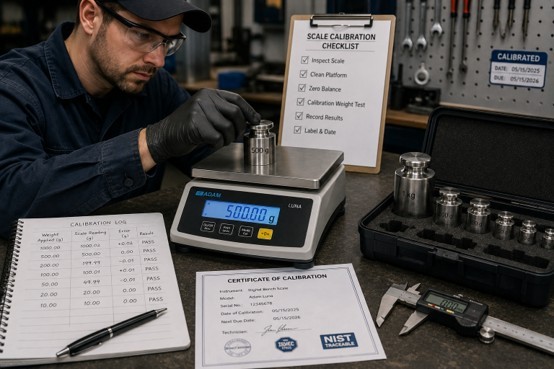
The shops that avoid most of these problems tend to share one thing: they've made measurement a checkpoint instead of a judgment call. Someone checks the number. Write it down. Move on. Every time, regardless of how confident anyone's feeling that particular day. It sounds almost too simple to be the actual answer, but confidence has never been a reliable substitute for a number someone actually verified.
None of this turns a small operation into a lab, and it doesn't need to. It just means accepting that the parts of the job nobody ever photographs, the calibration check, the temperature log, the number written down instead of guessed, are usually the parts deciding whether the finished work is actually going to last. Everyone notices the visible craftsmanship. Almost nobody notices the quiet correct number underneath it. But it's usually the reason the visible part gets to exist at all.

What's your reaction?
You may also like
-

How to Make a Short Business Promo Video Without Losing the Message
-
How to Create Consistent AI Images for a Multi-Visual Content Project
-
How Two People Can Compare Cities Before Turning a Move into a Compromise
-
Why Choose House Cleaners Redding CA for Your Home
-
Planning Roof Replacement Cleanup When Driveway and Yard Access Are Limited or Restricted
-
Designing Outdoor Kitchens for Food Safety, Practical Storage, and Efficient Meal Preparation


Comments
0 comment