




Introduction: Full Stack Developers Are Shaping the Future in Software Development
Full stack developers have emerged as critical contributors in modern software development, bridging the gap between frontend interfaces and backend systems. Their ability to work across multiple layers of application architecture—including user experience, server-side logic, databases, and deployment pipelines—makes them highly valuable in today’s fast-paced digital ecosystem. As businesses increasingly demand scalable, responsive, and integrated solutions, full stack development has become a core competency in building modern applications.
Why Full Stack Developer Certifications Are Becoming Essential for Developers
The increasing complexity of modern application development has made certifications an essential component of a developer’s professional growth. Full stack development requires expertise across multiple technologies, including frontend frameworks, backend languages, databases, and deployment environments. Certifications provide a structured pathway to validate this diverse skill set, ensuring developers can demonstrate practical proficiency in real-world scenarios.
Top 7 Full Stack Developer Certifications for Developers in 2026
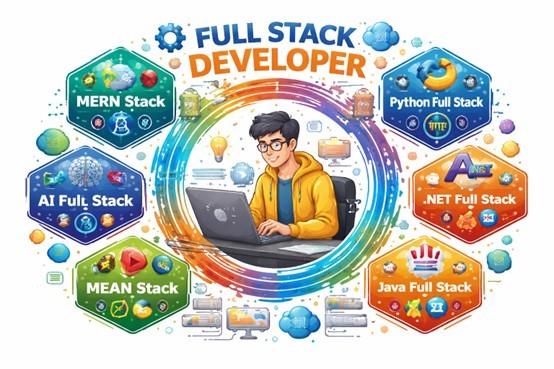
The landscape of full stack development in 2026 is defined by versatility, scalability, and the ability to integrate multiple technologies into cohesive application ecosystems. The top full stack developer certifications focus on key areas such as frontend frameworks, backend programming, database management, cloud integration, and DevOps practices. These certifications are designed to evaluate real-world problem-solving skills, ensuring developers can handle end-to-end application development with efficiency and precision.
1. MERN Stack Certification in 2026: Powering Modern JavaScript Full Stack Careers
The MERN Stack Certification validates expertise in one of the most in-demand JavaScript-based full stack ecosystems, combining MongoDB, Express.js, React, and Node.js. This certification focuses on end-to-end application development, enabling developers to build dynamic, scalable, and high-performance web applications. It evaluates practical skills in frontend development using React, backend logic with Node.js and Express, and database management with MongoDB. As modern applications increasingly rely on JavaScript-driven architectures, this certification ensures alignment with current industry standards, including API integration, state management, and cloud deployment. It is designed to reflect real-world development workflows, making it highly relevant for developers aiming to work in modern full stack environments.
2. Full Stack Developer Certification in 2026: Mastering End-to-End Development
The Full Stack Developer Certification provides a comprehensive validation of skills required to develop complete web applications across frontend and backend systems. It focuses on integrating user interfaces, server-side logic, and databases to create scalable and high-performance solutions. This certification evaluates real-world capabilities such as API development, system architecture, and deployment workflows. As businesses increasingly demand versatile developers capable of handling entire development lifecycles, this certification ensures alignment with modern industry requirements and best practices.
3. Python Full Stack Certification in 2026: Building Scalable and Intelligent Applications
The Python Full Stack Certification validates expertise in developing complete web applications using Python-based technologies. It focuses on backend frameworks, frontend integration, database management, and API development. Python’s versatility and growing adoption in web development and AI-driven applications make this certification highly valuable. It ensures developers can build scalable, secure, and high-performance applications aligned with modern industry standards.
4. .NET Full Stack Certification in 2026: Enterprise-Grade Development Expertise
The .NET Full Stack Certification validates expertise in building enterprise-level applications using Microsoft technologies. It focuses on frontend development, backend programming with .NET frameworks, and database integration. This certification ensures developers can design scalable, secure, and high-performance applications aligned with enterprise standards. It is highly relevant for professionals working in large-scale systems and corporate environments.
5. Java Full Stack Developer Certification in 2026: Enterprise-Level Development Mastery
The Java Full Stack Developer Certification validates comprehensive expertise in building scalable, enterprise-grade applications using Java technologies. Java remains a dominant force in backend development due to its stability, performance, and widespread adoption in large-scale systems. This certification focuses on integrating frontend technologies with robust backend frameworks such as Spring, along with database management and API development. It evaluates real-world development capabilities including object-oriented programming, microservices architecture, and secure application design. As organizations continue to rely on Java for mission-critical applications, this certification ensures developers possess the necessary skills to design, develop, and deploy high-performance systems aligned with enterprise standards.
Conclusion: Building Future-Ready Careers with Full Stack Certifications
The rapid evolution of software development has positioned full stack expertise as a critical requirement for building scalable, high-performance, and intelligent applications. Certifications across MERN, MEAN, Python, Java, .NET, AI Full Stack, and comprehensive Full Stack development collectively provide a structured pathway to mastering modern technologies and development practices. These certifications validate practical capabilities in frontend frameworks, backend systems, database management, cloud integration, and AI-driven application design.

What's your reaction?
You may also like
-

Why Small Roofing Problems Can Become Harder to Diagnose When Homeowners Delay Repairs
-
Planning a Stair Lift for Shared Homes Without Disrupting Everyday Staircase Use
-
Managing Household Waste During Large Decluttering Projects Without Creating New Clutter
-
How to Plan Impact Door Installation Around Security, Access, and Everyday Household Routines
-
How Commercial Roofing Maintenance Planning Helps Property Managers Track Roof Conditions
-
Designing Privacy Around Street-Facing Windows Without Giving Up Useful Natural Daylight














Comments
0 comment