




Introduction
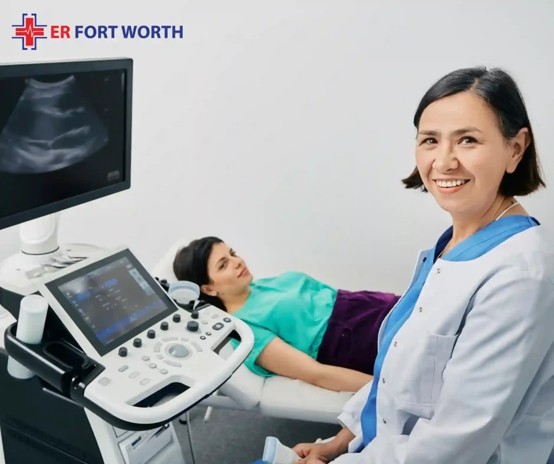
Diagnostic ultrasound scans are extremely useful for speeding up diagnoses in situations where getting an accurate diagnosis in a timely manner will be crucial. We are all familiar with ultrasound scans being used during pregnancy, but ultrasound scans can also be used to look inside the body to examine various organs, soft tissues and blood vessels, with no need for surgery or exposure to radiation. Ultrasound scanners utilise sound waves to generate images of the inside of the body, which can help medical professionals to diagnose the possible source of things like pain, swelling or other symptoms, especially within the ER setting.
1. Abdominal Ultrasound Scans for Sudden Stomach Pain
Doctors perform abdominal ultrasound scans to view the liver and gallbladder and kidneys and spleen and abdominal blood vessels. Medical professionals use this technique to diagnose patients who enter the emergency room with unexpected abdominal pain and swelling and discomfort. Medical professionals use ultrasound to detect gallstones and fluid accumulation and particular kidney disorders. Doctors can use this tool to track medical conditions which need fast medical attention. Ultrasound scans help doctors detect various abdominal disorders but they do not identify all medical issues which require patients to undergo ionizing radiation exposure. Medical professionals in emergency situations use ultrasound results together with their physical assessment and blood analysis and other diagnostic imaging to determine the reason for patient symptoms.
2. Cardiac Ultrasound for Heart Emergencies
Doctors perform cardiac ultrasound which they call echocardiography to view the heart's anatomy and its operational movements. The test reveals how well the heart circulates blood while it detects both heart function abnormalities and fluid accumulation in the heart area. Emergency room services benefit from this particular imaging method because it helps doctors diagnose patients who show up with major breathing difficulties and chest pain and circulation problems. Medical professionals use focused cardiac ultrasound to view critically ill patients who require emergency care at their point of care for immediate treatment choices. Medical professionals depend on ultrasound results to support their diagnosis of heart conditions yet they have to order electrocardiograms and other essential cardiac assessments. Doctors base their selection of medical tests on the combination of patient symptoms with the results from their clinical examinations.
3. Pregnancy-Related Ultrasound Scans
Pregnancy related ultrasound exams are indicated when a pregnant patient presents with abdominal pain, vaginal bleeding or other symptoms that are concerned for her pregnancy. The ultrasound can be used to evaluate the pregnancy and look for potential complications, some of which require more urgent evaluation. In the early stages of pregnancy, the ultrasound can be used to evaluate if the pregnancy is in the appropriate place and to evaluate for other concerns that include the possibility of an ectopic pregnancy. Depending on the situation, the ultrasound can be used to evaluate the development of the pregnancy and to look for evidence of bleeding internally.
4. Ultrasound Scans for Internal Injuries
In a car crash, fall or other injury, a doctor may order a focused ultrasound exam to evaluate for bleeding inside the body. The Focused Assessment with Sonography for Trauma (FAST) exam is one such test. An additional test called eFAST can also evaluate for some chest emergencies, including a potential collapsed lung. These bedside tests are particularly helpful after a significant trauma because they can be performed quickly and at the patient's bedside. During emergency room services an ultrasound exam can help guide the team on whether to pursue scanning or go to a procedure.A normal ultrasound exam cannot always exclude internal injuries when there are concerning symptoms.
5. Vascular Ultrasound for Blood Flow Problems
Blood flow through your blood vessels A Doppler ultrasound can be used to observe blood flow through your blood vessels. The physician might prescribe a Doppler ultrasound if you have swelling, tenderness, and/or pain in an arm or leg, since these symptoms are frequently related to a blood clot. An ultrasound can also be used to examine for a blood clot condition called deep vein thrombosis that needs to be addressed right now because the blood clot can travel to the lung(s). A circulatory system measures circulation for blood flow through the circulatory system.
6. Kidney and Urinary Tract Ultrasound Scans
Doctors use kidney and urinary tract ultrasound scans to inspect the kidney and bladder of patients who have moderate to severe flank pain, can't urinate, or have other urinary symptoms. They may detect some signs of the urinary flow problem, for example swelling in the kidney caused by the problem. It can also be used to check whether there is urinary retention in the bladder, which cannot empty, in an emergency room. It can be a preferable option to prepare for other tests or procedures for patients, especially as it doesn't involve exposing the patient to ionizing radiation, although not all urinary stone and flow issues can be detected on it. The doctor may order a CT scan, testing urine, or testing blood to find out the cause depending on the patient's situation.
7. Soft Tissue Ultrasound for Swelling and Infections
The soft tissue ultrasound can be used by the doctors in order to research localized swelling, painful lumps, skin infection, and injury involving the muscles or other soft tissues. For example abscesses can be told apart from the inflamed tissues, around them. This helps doctors decide whether drainage, medication or another type of treatment is needed. The ultrasound can also help with certain muscle injuries to be accessed, as well as the fluid collection beneath the skin. For the ER services, this can be of some more information when a physical exam alone cannot assist, but the treatment for the patient is based on a presumed condition and should be considered with medical history and physical examination.
Conclusion
Ultrasound imaging can help the emergency medicine team explore the abdomen, test for injuries, and view the blood flow through the body to diagnose potentially life-threatening conditions. Ultrasound can be used to investigate a patient's body for cardiology purposes, pregnancy, trauma, vascular issues, the kidney and the soft tissues of the body. When used with proper protocols and an understanding of the limitations, ultrasound can help patient management in the emergency room, but it is one piece of the diagnostic puzzle and may require the patient to go on for further testing including bloodwork and CT scans.

What's your reaction?
You may also like
-

8 Smart American Dream Auto Warranty Tips for Drivers
-
6 Ultimate American Dream Insurance Plans Explained
-
Top 5 Humidifier Brands for Home Offices and Productive Workspaces in 2026
-
How to Keep a Short Business Promo Focused on One Offer
-
8 Smart American Dream Auto Protection Tips for Drivers
-
7 Ways California Professional Growth Advisors Help Businesses Maximize R&D Tax Credits












Comments
0 comment