




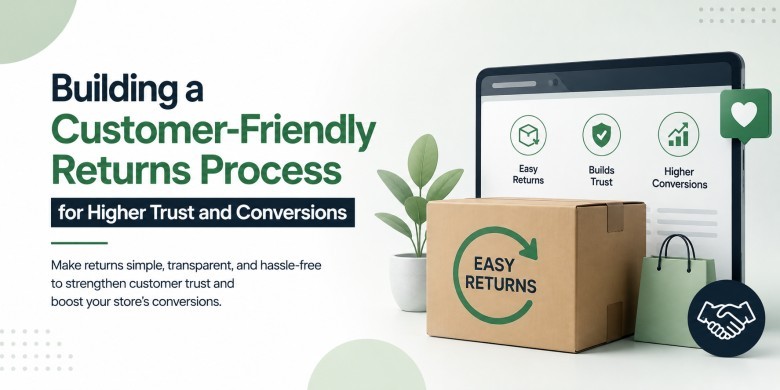
Why Returns Are a Trust Driver, Not a Cost
To build a customer-friendly returns process that boosts trust and conversions, start by making your return policy clear and accessible, then implement a PrestaShop returns module that supports EU withdrawal compliance, automated RMA management, and self-service returns for both registered and guest customers. Optimise the process by offering prepaid labels, an instant refund option, and proactive communication to reduce friction and build loyalty.
Returns are often treated as a necessary evil, the unwelcome end of a sales cycle. That framing misses what is actually happening. Every return is a moment of vulnerable interaction between your brand and a customer who has already committed to you once. How you handle that moment determines whether they come back for a second or third purchase, or whether they quietly take their business to a competitor with a less complicated returns page.
The numbers explain the opportunity. European shoppers returned around seven percent of the overall e-commerce market revenue in 2024, with more than half of them sending back products they had purchased online. Meanwhile, across the Atlantic, ecommerce returns are projected to account for almost 48% of US retail returns by 2029, hitting a total of $951.36 billion. With online return rates averaging around 20% of orders heading into 2026, returns are not a rare edge case. They are a core part of how modern ecommerce operates.
Here is what that means for your store: a customer who returns a product easily is not a lost sale. They are a customer who has just learned that your store is safe to trust. That confidence translates directly into higher average order values and repeat purchases, because shoppers factor the perceived risk of buying from you into every decision they make. A generous, well-executed returns policy removes that risk and makes the buy button feel lighter.
Treating returns as a trust-building tool also changes how you allocate resources. Instead of investing energy in hiding your policy at the bottom of a footer, you surface it at the checkout, explain it in your confirmation emails, and let customers manage the process themselves without emailing your support team. The cost of processing a return is small compared with the cost of losing a customer who felt trapped by a complicated process.
This is where the right infrastructure matters. A returns module, such as the EU Withdrawal & Return module, automates the parts of returns that usually generate friction: the request form, the approval workflow, and the communication updates. It gives customers a self-service portal that works for both registered and guest shoppers, which matters because guest checkout is common, and you do not want to force account creation just to process a return.
When a customer can initiate a return in under two minutes and track its status without contacting anyone, your store reads as organised and reliable. That impression carries more weight than any marketing claim about customer care.
EU Withdrawal Rights: The Legal Non-Negotiables
Before you optimise the returns experience for trust, you must first get the legal framework right. The EU Consumer Rights Directive gives online shoppers a cooling-off period of 14 calendar days after delivery to change their mind, with no reason required. This right applies across all EU member states, and your store needs to handle it correctly from the moment a customer clicks "buy".
Getting this wrong is expensive. Return fraud alone costs retailers over $100 billion annually, but the bigger risk is regulatory. Non-compliance with EU consumer law can trigger fines, forced refunds, and a hit to your reputation that no marketing budget can fix.
Here is what the directive requires of every EU-facing store:
● A clear 14-day withdrawal window. The clock starts the day the customer (or someone they nominate) receives the goods. If you sell services, it starts the day the contract is concluded.
● A mandatory withdrawal form. You must provide a standard model form that customers can fill in and submit electronically. It needs to be easy to find, not buried in your terms and conditions.
● Refund within 14 days. Once the customer withdraws, you have 14 days to refund all payments received, including standard delivery costs. You can withhold the refund only until you receive the goods back.
● Clear information before purchase. Shoppers must be told about their withdrawal right, the 14-day deadline, and who pays return shipping before they complete their order.
● Exceptions that narrow the right. Custom-made items, sealed goods that are unsealed after delivery, and hygiene-sensitive products are exempt. You need to know which of your products fall into these categories.
The practical challenge is that these rules apply per order, per customer, and per product category. A manual system using emails and spreadsheets will eventually miss a deadline. That is where a dedicated returns module earns its keep. The EU Withdrawal & Return Pro Module automates the entire withdrawal lifecycle: it generates the legal withdrawal form, tracks the 14-day window automatically, and centralises returns, complaints, and cancellations in one portal for both registered and guest customers. For $49.00, it removes the human error factor from a legal obligation.
Think of compliance not as a burden but as the foundation of trust. When a shopper sees a clear, lawful withdrawal process, they stop worrying about being locked into a purchase they regret. That confidence translates directly into higher conversion rates at checkout.
How Does a Returns Module Work in PrestaShop?
A customer-friendly returns process starts with the right infrastructure. In PrestaShop, a dedicated returns module replaces the manual back-and-forth of email and spreadsheets with a structured, automated workflow that both your team and your customers can follow from start to finish.
At its core, a returns module in PrestaShop manages the entire lifecycle of a return, from the moment a customer submits a request to the moment the refund lands back in their account. The EU Withdrawal & Return Pro Module consolidates this into a single self-service portal, which matters more than you might think. When a customer can initiate a return without contacting your support team, you remove friction from a moment that is already stressful for them.
RMA Creation and the Self-Service Portal
When a customer wants to return an item, they log into their account and open the returns portal. The module generates a Return Merchandise Authorisation (RMA) number automatically, which becomes the reference point for every subsequent interaction. The customer selects the items, chooses a reason from a dropdown, and submits the request. There is no need to draft an email or wait for a response.
For guest customers, the process works slightly differently but is equally straightforward. Since guests do not have an account, the module allows them to enter their order reference and email address to access the same returns portal. This is a critical detail, because a significant share of online orders gets returned, and many of those come from one-time buyers.
Status Tracking for Everyone Involved
Once the RMA is created, the module tracks its status through every stage of the journey. Your team can see at a glance which requests are pending approval, which items have been shipped back, and which refunds have been processed. The customer sees the same information in their portal, which reduces the number of "where is my refund?" emails that flood your support inbox.
A clear status system also helps you manage expectations. When a customer knows their return has been received and is being processed, they are far less likely to file a dispute or leave a negative review. Transparency here is not a nicety, it is a retention strategy.
Automated Refunds and Legal Compliance
The module also automates the financial side of the process. Once a returned item passes inspection, the refund is triggered automatically according to the rules you have configured. This removes the risk of human error and ensures that refunds are issued within the legal timeframe required by EU withdrawal regulations.
Because the module handles returns, cancellations, complaints, and contract withdrawals in one place, it also gives you a complete audit trail. If a customer escalates a dispute, you have a documented record of every step taken. That documentation is your best defence in a legal challenge, and it is also the foundation of a genuinely customer-friendly returns experience.
Designing a Self-Service Returns Experience
A customer-friendly returns process starts long before the customer clicks "submit". The goal is to remove friction at every touchpoint, turning a potentially stressful moment into a smooth, reassuring interaction. In practice, this means designing a self-service experience that feels effortless, even for guests who have never created an account on your store.
The first rule is visibility. Your returns policy should not be buried in the footer or hidden behind a support ticket. It deserves a dedicated, clearly labelled page that is linked from the product page, the order confirmation email, and the customer account dashboard. When a shopper can find your policy in two clicks, you signal confidence. When they have to hunt for it, you signal the opposite.
The request form itself must be simple. Ask for the essentials only: order number, email address, the item(s) being returned, and a reason. Do not force customers to write a long explanation or upload photos if they do not want to. Every extra field is a point where a frustrated shopper abandons the process and picks up the phone instead.
Guest returns are non-negotiable. Around seven percent of the overall e-commerce market revenue in Europe was returned in 2024, with more than half of shoppers sending back products they purchased, according to Statista. Many of those buyers never created an account. If your system requires a login to start a return, you are forcing a registration step that has nothing to do with the problem the customer is trying to solve. Support guest access by order number and email, or you will lose customers at the final hurdle.
Clear instructions matter just as much as the form. After submission, the customer should immediately see what happens next: where to send the parcel, which carrier to use, and how long the refund will take. Send a confirmation email with the return label attached, plus a follow-up when the item arrives at your warehouse. This is where the EU Withdrawal & Return Pro Module earns its place, because it automates these status updates and keeps the customer informed without extra work from your team.
Finally, treat returns as the start of a conversation, not the end of a sale. A well-designed self-service portal that guides the customer through each step builds more trust than a phone call ever could. When the process is transparent and the status is always visible, shoppers remember the smooth experience, not the reason they returned the item.
Streamlining Complaints and Cancellations
Returns are the visible part of a larger picture. Before a customer even reaches the return form, they may have filed a complaint about a damaged item or cancelled an order that no longer suits them. Handling these three processes separately creates confusion, duplicates data entry, and risks missing legal deadlines. A truly customer-friendly returns strategy treats complaints, cancellations, and returns as one continuous flow.
EU law requires you to handle withdrawal requests within 14 days of receiving the consumer's notice, and to issue refunds within 14 days after that. When a complaint or cancellation arrives through email, phone, and social media separately, tracking those deadlines becomes a nightmare. Centralising everything in one place is not just convenient, it is a compliance safeguard.
Why complaints and cancellations belong in the same workflow
Consider a typical scenario. A customer in Berlin orders a jacket, receives it with a broken zipper, and emails your support address. Your team replies with a return label. Two weeks later, the customer asks where their refund is. Your team cannot find the original email thread because it was filed under a different ticket number. The customer leaves a negative review, and you have spent three hours of staff time resolving something that should have been automated.
That is why the best configurations use a unified claims portal. When a customer logs into their account, they should see every interaction with your store, including returns, complaints, and cancellations, in one timeline. For guest customers, the same portal works with their order number and email address, so you never lose track of a request.
How to implement this in PrestaShop
Practical implementation comes down to three steps. First, map out every way a customer can currently reach you. List the contact forms, email addresses, and phone lines. Second, decide which channels will feed into your central system. Third, set up automatic statuses so that a complaint about a damaged product moves into the returns workflow without manual intervention.
The PrestaShop EU Withdrawal & Return Pro Module is built for exactly this. It provides a single portal where customers submit returns, complaints, and cancellations, and it tracks every request against the legal deadlines. For store owners, the benefit is straightforward: you always know which requests are pending, which are overdue, and which need escalation.
● Cancellations should be processed before dispatch, with automatic confirmation sent to the customer.
● Complaints about damaged or incorrect items should trigger a replacement or refund workflow immediately, not sit in a shared inbox.
● Withdrawal requests after delivery should follow the standard return path, with the 14-day clock visible to your team.
Data from RichPanel shows that apparel return rates run between 20-40%, far above the average of about 20% across all categories. High-return categories produce more complaints and cancellations, too. If your store sells clothing, centralising these processes is not optional; it is essential for keeping your team's workload manageable.
One caution: do not force customers to create an account to file a complaint. Around half of European shoppers send back products they purchased, and many of those are guest checkouts. Your portal must support guest access from day one.
The outcome of this approach is a store where nothing slips through the cracks. Customers receive faster resolutions, your team spends less time hunting for information, and your compliance posture improves because every deadline is tracked automatically.
What Are the Best Practices for Refund Processing?
Refund speed is one of the fastest ways to build customer-friendly returns that actually retain shoppers. When a customer initiates a return through your EU Withdrawal & Return Pro Module, the clock starts ticking on their patience. A slow, opaque refund process quietly tells customers that you value their money more than their trust.
Here are the practical standards that separate smooth refund operations from frustrating ones:
● Process refunds the moment the return is approved, not when the item arrives back at your warehouse. If the customer has provided tracking information, you can reasonably release the refund while the parcel is in transit. This is particularly important for EU withdrawal requests, where the law mandates a 14-day refund window after you receive the notification of withdrawal.
● Return the payment via the original method wherever possible. If the customer paid with PayPal, refund through PayPal. If they used a credit card, push the money back to that card. Offering store credit as a default is a common retention tactic, but presenting it as the only option damages trust. Make store credit an optional choice, never a requirement.
● Communicate every step automatically. Customers should receive a confirmation when their return is registered, another when the refund is initiated, and a final notification when the money lands in their account. The EU Withdrawal & Return Pro Module handles this workflow automatically, which keeps your team from chasing updates manually.
● Include the expected timeline in every confirmation. The average ecommerce return rate sits around 19-20.5% in 2026, which means a substantial share of your customers will experience your refund process first-hand. Telling them exactly when the money will arrive removes the biggest source of support tickets: uncertainty.
One approach worth considering is an instant refund policy for loyal customers or low-value items. Rather than waiting for the returned product to pass inspection, you refund immediately and handle any issues after the fact. This is a calculated risk, but for categories like beauty (4-12% return rates) or electronics (8-15%), the margin of trust you gain typically outweighs the occasional fraudulent claim.
Finally, standardise your refund communication across every channel. If a customer opens a ticket through your Help Desk Module, the support agent should see the return status instantly. When your team answers questions with accurate, current information, the refund feels managed even before the money arrives. That consistency is what turns a routine return into a reason to shop with you again.
Measuring Returns Success: KPIs to Track
Once your returns process runs smoothly, you need to prove it is working. Tracking the right metrics turns returns from a perceived cost centre into measurable evidence of customer trust. With online return rates hovering near 19.3% and US retailers absorbing roughly $850 billion in returns in 2025, ignoring these numbers is not an option.
Four KPIs matter most for PrestaShop store owners who want to monitor both operational health and customer loyalty.
● Return rate. Calculate the percentage of orders sent back. The average ecommerce return rate sits around 19-20.5% in 2026, but category-level numbers vary widely: apparel runs 20-40%, electronics 8-15%, and beauty 4-12%. Compare your rate against your category, not a generic benchmark.
● Refund processing time. Measure the days between a customer submitting a return and receiving their refund. Shorter processing times directly reduce support tickets and build confidence in your store.
● Customer satisfaction (CSAT) post-return. Send a short survey after a return is completed. Customers who rate the experience highly are far more likely to shop again.
● Repeat purchase rate after a return. This is the trust metric that matters most. If a customer returns an item and still buys again within 90 days, your returns process has done its job.
To track these efficiently, a dedicated module such as the PrestaShop EU Withdrawal & Return Pro Module centralises return requests, refund statuses, and customer communications in one dashboard. Instead of juggling spreadsheets and email threads, you can spot bottlenecks at a glance and respond before a customer feels ignored.
Review these KPIs monthly. A rising return rate warrants investigation into product descriptions or sizing guides, while a slow refund time points to workflow issues. A fast, friendly return process is one of the cheapest loyalty programmes you can run.
How to Launch Your Optimised Returns Process
Rolling out a customer-friendly returns experience in PrestaShop is a project you can complete in a single afternoon, but it pays to work through it methodically. Follow these five steps to move from a reactive, ticket-based process to a structured, EU-compliant returns flow that builds long-term trust.
Step 1: Audit Your Current Returns Process
Before changing anything, map out how a return reaches you today. Does a customer email your support address? Fill out a contact form? Find the returns page in your legal notices? Trace the journey and note where friction appears.
Pay particular attention to these pain points:
● How long it takes a customer to find your return instructions
● Whether customers can start a return without contacting support first
● Which information you need from the customer to process the return
● How your team tracks return status across email threads
Most merchants discover that customers abandon returns at the first hurdle: hunting for the policy. Your audit should identify every step that requires manual effort, since those are the steps that will scale poorly as your order volume grows.
Step 2: Install and Configure a Returns Module
With your audit complete, the next move is to automate the workflow. The EU Withdrawal & Return Pro Module is built around EU Directive 2023/2673 and gives you the full self-service infrastructure you need. It provides a 4-in-1 customer claims portal covering returns, complaints, cancellations, and legal contract withdrawals, so customers can initiate any process without a support ticket.
During configuration, focus on three areas:
- Return rules per product category. Apparel return rates can run 20-40% while beauty products sit around 4-12%, so your module settings should reflect the reality of each category. Configure separate windows and conditions rather than applying one blanket policy.
- Automated status updates. Set the module to notify customers at each stage: return request received, item received at warehouse, refund issued. This removes the need for customers to email asking "where is my refund?" and cuts support volume.
- Guest customer access. Your module should handle guest checkouts, since many European shoppers never create accounts. Blocking guests from the returns portal forces them back to email, which defeats the purpose of automation.
Step 3: Update Your Returns Policy Page
Your legal information pages need to match the process you have just configured. Update your returns policy to state the withdrawal window clearly, list any categories that fall under the exceptions to the right of withdrawal, and explain exactly how customers start a return.
Also, update your order confirmation emails and your customer account area. If a customer can find the return process from the order they are looking at, without searching your site, you have removed the biggest source of friction.
Step 4: Train Your Team on the New Workflow
Your support team no longer handles the return initiation, but their role in the process is still essential. They review returned items, approve or reject claims, and manage disputes. Walk them through the module's centralised dispute management so everyone understands how to handle edge cases, such as damaged items or customers who request a withdrawal after the legal window has closed.
Give your team a simple decision guide: which situations require manual review, which are fully automated, and how to escalate. The goal is consistency, since a returns policy that gets applied differently depending on which agent answers the ticket erodes customer confidence.
Step 5: Test the Complete Journey
Before you announce the new process, test it from the customer's perspective. Place a test order, then go through the return flow on both a registered account and a guest checkout. Check that:
● The return request confirmation reaches the customer immediately
● Status updates trigger at every stage without manual input
● Your team receives the right notifications to process the return
● The refund or exchange is issued within your stated time frame
Testing is also the moment to examine your refund handling from a financial perspective. With US online return rates averaging 20.8%, every improvement in processing speed directly improves your cash flow position.
Once the journey works end-to-end, you have a returns process that functions as a strategic asset. Customers who experience a frictionless return are far more likely to order again, and your team spends less time on administrative follow-up. Run the same test quarterly to catch any regressions introduced by PrestaShop updates or module changes.
Customer-friendly returns are no longer a back-office afterthought. They are the deciding factor between a one-time buyer and a loyal customer. In the EU, getting returns right also means meeting strict legal duties under Directive 2023/2673. This guide explains how PrestaShop merchants can turn returns from a cost centre into a trust-building asset, with practical steps for configuring your store to satisfy both shoppers and regulators.
Returns directly shape purchasing behaviour. U.S. returns total $849.9B, online return rates average 20.8%, and return fraud costs retailers $100B+ according to 2026 ecommerce statistics. Meanwhile, the average ecommerce return rate is about 20% of online orders heading into 2026: apparel runs 20-40%, electronics 8-15%, beauty 4-12%. These figures make one thing clear: returns happen at scale. How you handle them determines whether you retain that revenue or lose it permanently.
Why Returns Drive Customer Trust in Ecommerce
Online shoppers cannot touch, try, or inspect products before buying. That inherent uncertainty makes a generous, transparent returns policy one of the most persuasive trust signals available. When a store clearly states that returns are easy and free, the perceived risk of purchase drops sharply, and conversion rates tend to rise.
Returns also represent a second chance. A customer who receives a wrong-size pair of shoes and gets a fast, polite exchange is often more loyal than a customer who never had a problem at all. The reverse is equally true. A complicated, slow, or hostile returns process is one of the fastest ways to lose a customer permanently, along with any future word-of-mouth recommendations.
Consider this: around seven percent of the overall e-commerce market revenue in Europe was returned in 2024, with more than half of shoppers sending back products they purchased. That is a massive volume of transactions where the customer was ultimately dissatisfied. The brands that handle these moments well convert a negative experience into a positive one. The brands that handle them poorly simply lose the customer.
A frictionless returns process is the most cost-effective loyalty programme most ecommerce stores will ever run. It costs nothing to make the policy generous, but the return in customer retention is measurable.
The EU Legal Framework: What Directive 2023/2673 Requires
EU consumers enjoy a statutory 14-day withdrawal right for distance purchases (online, phone, or mail order). This right allows customers to change their minds for any reason, without stating a justification, within 14 calendar days of receiving the goods. This right is not an optional extra; it is a legal obligation for all EU-based merchants selling to consumers.
The landscape shifted further with the updated consumer protection rules under EU Directive 2023/2673. While the core 14-day withdrawal right remains, the directive tightens requirements around transparency, information duties, and the digital handling of consumer rights. Merchants must make withdrawal terms clear before purchase, provide a model withdrawal form, and issue refunds within strict time limits, typically 14 days of receiving the returned goods or the customer's withdrawal notice.
For PrestaShop stores, compliance is a visibility problem as much as a process problem. The withdrawal right and its conditions must be disclosed prominently, in plain language, before the customer completes checkout. PrestaShop's native configuration supports basic return requests, but it does not automatically generate the legally required withdrawal forms or track the statutory deadlines associated with the EU directive.
Failing to comply has practical consequences. Beyond the obvious risk of customer disputes and chargebacks, regulators can issue fines, and marketplaces may review listings for compliance. Given that ecommerce will comprise almost 48% of US retail returns by 2029, with total returns reaching $951.36 billion the global trend is toward more returns, not fewer. EU merchants need a system that handles this volume while staying legally airtight.
Returns as a Strategic Trust-Building Tool
Most merchants treat returns as a cost to be minimised. The smarter approach is to treat returns as a touchpoint for trust-building. Every return interaction is a chance to demonstrate that your brand stands behind its products, communicates honestly, and respects the customer's time.
Think about the psychology of the moment. A customer initiating a return is already mildly disappointed or frustrated. The speed and tone of your response either amplifies that frustration or dissolves it. A return portal that takes 30 seconds to file, generates an instant RMA number, and clearly states the next steps reassures the customer they made a safe purchase from a legitimate business.
The data support the strategic view. US retailers absorbed roughly $850 billion in returns in 2025, and online return rates run near 19.3%. Most teams pour their energy into processing costs rather than retention. That is a missed opportunity. The same return can be an exchange that retains the sale, a repair that restores confidence, or a refund that earns goodwill. The processes you put in place decide which outcome you get.
Building a Customer-Friendly Returns Policy in PrestaShop
Before you configure any module, your policy itself sets the tone. A customer-friendly returns policy is clear, concise, and generous. It states the return window (at minimum the legal 14 days), the condition of returned items, who covers shipping, and how refunds are issued. It avoids legal jargon and hiding caveats in fine print.
In PrestaShop, you implement this policy through the "Merchandise Returns" settings in your back office. You define the return period duration, the shipping cost responsibility, and the conditions that must be met. The native system also lets you set whether returns are allowed for all products or only specific categories.
However, the native return system has notable gaps. It does not automate the legal withdrawal notifications required by EU law. It offers no customer-facing self-service portal, which means every return request becomes a support ticket. And it does not generate the documentation needed to prove compliance if a dispute arises.
This is where the PrestaShop EU Withdrawal & Return Pro Module fills the gap. It brings your store into full compliance with EU Directive 2023/2673 by automating returns, cancellations, complaints, and legal contract withdrawals. The module provides a complete customer self-service portal, advanced workflow automation, and centralized dispute management for both registered and guest customers. Instead of managing returns through email threads, you get a structured system that tracks every request against the legal clock.
Designing a Returns Experience That Converts
The returns experience is a conversion tool in its own right. When a customer knows they can return a product easily, the risk of buying disappears. That confidence shows up in higher order values and fewer abandoned carts. But the opposite is also true: a confusing returns page can kill a sale as effectively as a broken checkout.
Design your returns experience with the same care you give your product pages. The goal is to make the process feel automatic, transparent, and fair. That means clear language, visible policy links throughout the customer journey, and a request form that asks only for the essentials: order number, email, items, and reason.
The EU Withdrawal Module supports this by giving customers a self-service portal where they can submit returns, complaints, and cancellations without contacting your support team. For guests, the same portal works with order reference and email. That alone removes the single biggest source of returns friction: the need to talk to someone.
Automation plays a central role in the experience. Status updates should flow automatically at each stage, from request received to item received to refund issued. The customer should never have to ask "where is my return?" because the system tells them before they think to ask.
Handling Complaints and Cancellations in the Same Flow
Returns are not the only post-purchase interaction that matters. Complaints about damaged or incorrect items, and cancellations before dispatch, are just as important for customer retention. Handling these through separate channels creates confusion for both your team and your customers.
A unified approach treats all post-purchase requests as part of one workflow. A complaint about a damaged item should trigger the same return process as a standard return. A cancellation request should be processed immediately without the customer needing to find a different form. When these processes share one system, deadlines are easier to track, and nothing slips through the cracks.
The Return Pro Module centralises dispute management, which means your team always knows which requests are pending, which are overdue, and which need escalation. That visibility is essential for staying compliant with the 14-day deadlines that EU law imposes.

What's your reaction?
You may also like
-

Why Small Roofing Problems Can Become Harder to Diagnose When Homeowners Delay Repairs
-
Planning a Stair Lift for Shared Homes Without Disrupting Everyday Staircase Use
-
Managing Household Waste During Large Decluttering Projects Without Creating New Clutter
-
How to Plan Impact Door Installation Around Security, Access, and Everyday Household Routines
-
How Commercial Roofing Maintenance Planning Helps Property Managers Track Roof Conditions
-
Designing Privacy Around Street-Facing Windows Without Giving Up Useful Natural Daylight












Comments
0 comment