




A bright red line runs across a pale surface. For a moment, it could be a road on a map or a stripe on an enormous building. The view widens: it is a ribbon winding through a miniature paper city. Nothing needed to explode or transform. The interesting event was the viewer discovering what they were looking at.
That fictional scene offers a useful approach to short AI video. Instead of asking for more action, decide which piece of information to reveal later. A small change in what the audience knows can give a simple visual a beginning and an ending.
There are several ways to construct that discovery. You can hide part of the subject, withhold a familiar size reference, or show an object before explaining its surroundings. Each produces a different kind of curiosity—and each asks for a different description of the scene.
Hide an answer, not the whole idea
A reveal needs something legible before the answer arrives. If the opening is only an indistinct blur, the audience has little to wonder about. The red line works because its colour and direction are clear even while its identity remains uncertain.
For a creator exploring that approach, Seedance 2.5 on JXP provides text-to-video and reference-generation routes, alongside duration and aspect-ratio settings. The creative task is to describe what the viewer sees first and what becomes visible later, rather than simply request a “surprising cinematic video.”
Write the answer down outside the prompt first: “The apparent road is a ribbon in a paper city.” Then decide which clue may appear early. A slight fabric texture could invite a guess; a large bow in the first frame would probably give the answer away.
This is not a demand for maximum secrecy. A reveal can be satisfying even when someone anticipates it. The opening should make the final view feel connected, not arbitrary.
Three reveals, three different questions
Occlusion asks: what is behind this? A paper screen covers most of a colourful object. As the screen moves aside, its outline becomes recognisable. Here, the hidden object should remain the same object throughout; the action is uncovering it, not transforming it into something else.
Describe the visible fragment as well as the obstruction. “A curved red edge appears beside a plain paper screen” gives a clearer opening than “hide the object.” Keep enough contrast between the two shapes for the uncovering to read.
Scale asks: how large is this? The ribbon scene belongs here. A close view removes the objects that would normally tell us its size. A wider view introduces paper rooftops and a tabletop edge, making the miniature setting understandable.
The size relationship is the important part. A camera retreat that leaves every object equally unfamiliar may widen the image without resolving the question. Include one recognisable scale cue in the final composition.
Context asks: what is this part of? A curved strip of coloured paper first appears as an abstract shape. The wider composition reveals that it belongs to a handmade spiral sculpture. The object has not changed identity; the audience can finally see its role.
Context reveals are useful when a complete composition is more interesting than its individual pieces. A motif becomes part of a pattern, or a small construction becomes part of a larger imaginary landscape. Avoid adding so much background detail that the original subject disappears from attention.
Describe the moment the answer becomes available
Once the reveal type is clear, separate the scene into what is initially visible, the change that exposes the answer, and the final view. These are writing notes, not claims that the interface has a dedicated reveal editor.
For the ribbon example, a suggested prompt might read:
Begin close to a red fabric ribbon crossing a pale surface, with no surrounding objects visible. Gradually widen the view to reveal an original miniature paper city arranged around the ribbon. End with the tabletop edge visible and the ribbon still easy to follow. Soft daylight, simple shapes, no lettering.
This is an illustrative request, not a tested result. It asks the generator to expose more of one setting rather than replace the setting halfway through. If a generated ribbon turns into a road instead, that is a different visual idea from the one described.
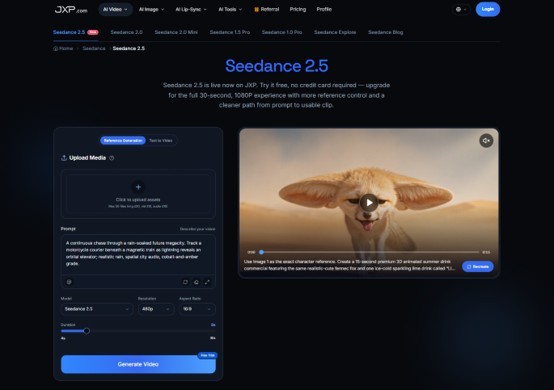
When exploring a setting that does not yet have a finished illustration, Seedance 2.5 text to video offers a starting point for that written sequence. If the appearance of the paper city matters more than open-ended invention, JXP's reference-generation route provides another way to supply visual context. Use original or appropriately cleared material and confirm that the platform permits the intended upload.
Leave room for the discovery to register
The final view should last long enough to understand. If the city appears only as the clip ends, the viewer may register a change without identifying the ribbon. Let the composition settle after the reveal instead of immediately adding another event.
A useful viewing question is not “Was that exciting?” but “At what point did you understand the scene?” Ask someone who has not read the prompt. Their answer can reveal whether the opening gave everything away or the ending never supplied enough information. One person's response is creative feedback, not proof of wider audience engagement.
Check the clip without sound as well. A sound cue can emphasise the discovery, but it should not be the only explanation of what appeared. If narration carries essential information, include accurate captions and time them so they do not accidentally reveal the answer before the picture does.
Surprise should change understanding, not misrepresent reality
An imaginary paper city leaves plenty of room for playful scale. A real product advertisement is different. A reveal should not imply that a product is larger, contains extra parts, or performs an action it cannot perform. Use accurate assets for factual product information and identify conceptual scenes where they could be misunderstood.
The ribbon's payoff is modest: a line becomes understandable as part of a small invented world. That is enough. For the next video, choose one thing the viewer does not know at the start, then give them a clear and enjoyable way to discover it.

What's your reaction?
You may also like
-

Liquidation Heatmap vs Open Interest vs Funding Rate: Building a Leverage-Aware BTC Trading Checklist
-
What Makes the Best Middle Schools in Colorado Stand Out?
-
Why Picking the Right Ring Makes All the Difference
-
5 Tips for Dressing with Confidence
-
7 Ways Latest News and Trends Shape Everyday Decisions
-
The Commuter’s Hero: Keeping Your Brand Front and Centre with Totally Branded Travel Mugs













Comments
0 comment