




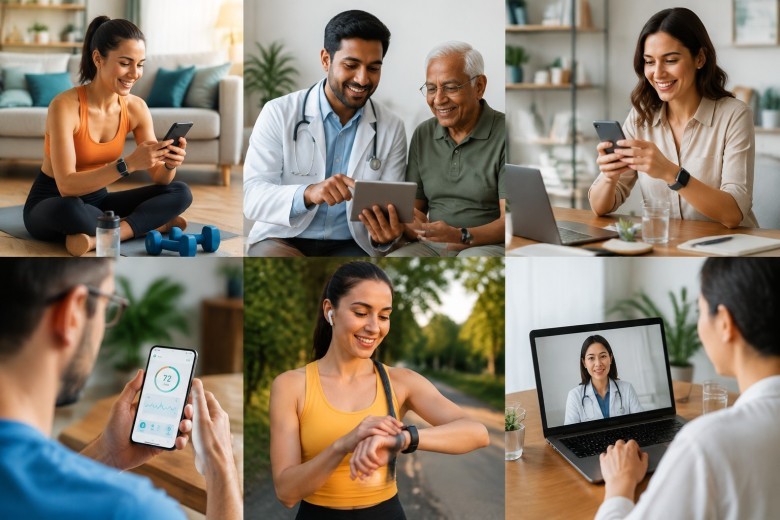
The digital health market is growing rapidly, and mobile health apps are driving much of that growth. Patients expect convenient digital care, healthcare providers need more efficient workflows, and medical organizations are investing in software that improves access, communication, and care delivery. Tasks that once required in-person visits or paperwork can now be completed through secure, user-friendly healthcare applications. According to a recent study, the digital healthcare market is projected to reach $187.9B by 2030.
This guide breaks down the main categories of health apps, what each type is built for, and its user base. The categories are more distinct than most people realize and understanding the differences helps whether you are a patient looking for the right tool, a clinician evaluating options, or someone building in this space.
Consumer Health and Wellness Apps
These are the health apps most people interact with first. They sit on personal devices and focus on general wellness rather than clinical care. The primary users are individuals who want to monitor their health, build better habits, or stay informed without involving a healthcare provider in every interaction.
- Fitness and Activity Tracking Apps
Fitness apps track physical movement, workouts, step counts, calories burned, and activity streaks. Many connect to wearable devices like smartwatches and fitness bands to pull real-time data without requiring manual input.
The data these apps collect is primarily motivational and behavioral. They help users stay consistent with physical activity by making progress visible and measurable. They do not diagnose anything or connect to clinical systems.
- Nutrition and Diet Apps
Nutrition apps let users log meals, track macronutrients, set calorie targets, and monitor dietary patterns over time. Some include barcode scanners that pull nutritional data from food databases automatically.
These apps work best when users engage with them consistently. The data they generate over weeks and months creates a useful picture of eating patterns, but the apps themselves do not make clinical recommendations. They inform personal choices.
- Mental Health and Mindfulness Apps
Mental wellness apps cover meditation, stress reduction, sleep improvement, and mood tracking. Calm and Headspace are the most recognized names here, but the category has expanded to include apps that offer structured cognitive behavioral therapy exercises, journaling prompts, and anxiety management tools.
Most of these are not clinical mental health applications developed for specific use. They are wellness tools. The difference is that a meditation app is appropriate for managing everyday stress. It is not a substitute for professional mental health treatment.
Chronic Disease Management Apps
These apps sit between consumer wellness tools and clinical software. They are built for people managing specific ongoing conditions, and they often involve more structured tracking, clinician oversight, or integration with medical devices.
- Diabetes Management Apps
Diabetes apps track blood glucose readings, insulin doses, carbohydrate intake, and medication schedules. Many connect directly to continuous glucose monitors and insulin pumps, pulling data automatically and displaying trends that help users and their care teams make better decisions between appointments.
The clinical value here is real. Consistent glucose tracking over time gives endocrinologists data they cannot get from a quarterly office visit alone. Some diabetes management apps have received FDA clearance as medical devices because of how directly they influence clinical decision-making.
- Cardiovascular Monitoring Apps
Heart health apps track resting heart rate, heart rate variability, blood pressure readings, and in some cases ECG data through connected devices. Apple Watch's ECG functionality and apps that connect to Bluetooth blood pressure cuffs fall into this category.
The data these apps generate has become clinically relevant as the devices producing it have become more accurate. Physicians increasingly ask patients with cardiac conditions to bring app-generated data to appointments because it provides a continuous picture rather than a single measurement taken in a clinical setting.
- Medication Management Apps
Medication reminder and tracking apps help patients with complex medication regimens stay on schedule. They send alerts, track doses taken, and in some cases connect to pharmacy systems or caregivers. For elderly patients managing multiple medications, these apps reduce missed doses and the errors that come from managing complex schedules without support.
Telehealth and Remote Care Apps
Telehealth apps connect patients with healthcare providers through video, messaging, or asynchronous consultation tools. This category expanded dramatically during the COVID-19 pandemic and has maintained significant adoption because it addresses genuine access and convenience problems that in-person care does not solve efficiently.
These apps range from general practitioner video consultation platforms to specialty-specific tools for dermatology, psychiatry, and physical therapy. The clinical interaction happens through the app, but the clinical judgment and decision-making belong to the licensed provider using it.
Remote patient monitoring is a related category where the app collects data from a patient at home and transmits it to a care team for review. A patient recovering from cardiac surgery, for example, might use an app that transmits daily vital signs to their care team, allowing early detection of complications without requiring daily clinic visits.
Clinical and Provider-Facing Health Apps
These are the digital health apps that healthcare professionals use rather than patients. The design priorities are different because clinical users need speed, accuracy, and workflow integration above all else.
- Electronic Health Record Mobile Apps
EHR mobile apps give physicians and nurses access to patient records, lab results, medication lists, and clinical notes from a smartphone or tablet. They are companion apps to larger EHR systems like Epic or Cerner and are built for clinical workflows rather than general usability.
- Clinical Decision Support Apps
Decision support apps help clinicians at the point of care. They might provide drug interaction checks, dosage calculators, differential diagnosis support, or access to clinical guidelines. These apps do not make decisions for clinicians. They surface relevant information faster than a clinician could retrieve it manually.
- Medical Reference and Education Apps
Medical reference apps give healthcare professionals and students access to clinical databases, drug references, anatomy tools, and continuing education content. They are professional tools for staying current in rapidly evolving clinical areas.
Specialized Health Apps Worth Knowing
Beyond the main categories, several specialized types of mobile health applications address specific needs that do not fit neatly elsewhere.
Women's health apps cover menstrual cycle tracking, fertility monitoring, pregnancy, and postpartum care. These range from basic cycle trackers to FDA-cleared fertility monitors that use basal body temperature and hormone data to predict fertile windows.
Rehabilitation apps guide patients through physical therapy exercises after injury or surgery, often using device sensors or camera-based movement analysis to verify that exercises are being performed correctly between in-person sessions.
Clinical trial apps support research by helping patients understand participation requirements, submit survey responses, track symptoms, and communicate with research teams without requiring frequent site visits. This is one of the areas where custom healthcare software has created significant operational improvements for clinical research organizations.
How to Choose the Right Health App
The right health app depends entirely on the problem it needs to solve:
- For general wellness and habit building, consumer fitness and nutrition apps work well
- For managing a specific chronic condition, look for apps built specifically for that condition with clinical validation behind them
- For connecting with providers remotely, telehealth platforms offer the most direct clinical value
- For clinical professionals, workflow-integrated tools that connect to existing systems outperform standalone apps
The category that matters most to you depends on your role and your specific need. Understanding the distinctions between consumer wellness tools, chronic disease management platforms, telehealth apps, and clinical software prevents the common mistake of reaching for the wrong type of tool for a given situation.
Health apps work best when they are matched to the right problem. The technology is sophisticated enough across all these categories that the limiting factor is usually clarity about what you actually need, not what is available.

What's your reaction?
You may also like
-

Early Signs of Cataracts You Should Not Ignore
-
7 Essential Urgent Care Tips for Kids – Open Near Me Today
-
How to Optimize a Local Business for AI Search
-
Practical Strategies for Building a More Successful Retail Business
-
Does SnapTrader AI Work? A Clear and Honest Answer
-
7 Ways Real-Time Weather Updates Improve Customer Satisfaction










Comments
0 comment