




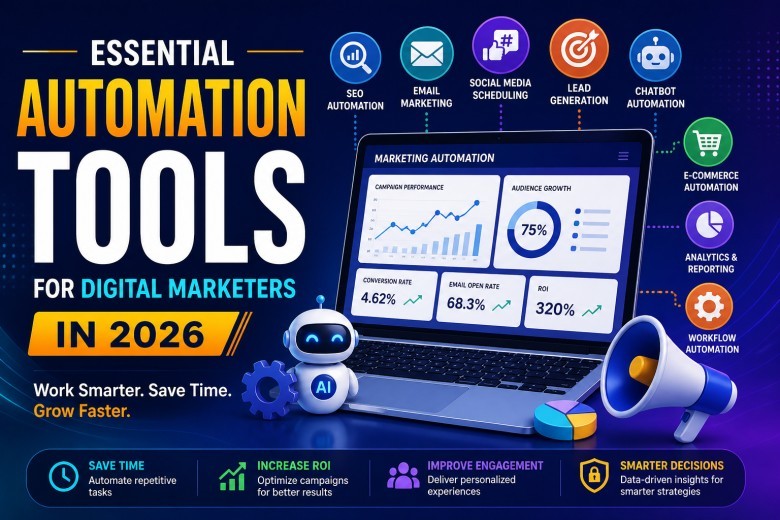
Digital marketing has become less about doing more work and all about working smarter with automation in 2026. Marketers must orchestrate complicated campaigns affecting multiple channels while still executing with personalization, speed, and accuracy by leveraging Machine Learning, Artificial Intelligence, and real-time data processing.
There is no way to keep doing everything by hand! This is where automation tools come into play. Whether it be SEO, email marketing, content creation, or analytics, automation has become the backbone of successful digital strategies.
In this comprehensive guide, we will examine the must-have automation tools that every digital marketer should be using in 2026, how they work, and how you can leverage them to grow your results. These tools are very critical to become the leader in your industry, whether you are an expert or a novice seo expert PrestaShop.
Why Automation Is Crucial in 2026
Before we start with particular tools, let us first be clear about why automation is becoming a must-have charm.
a. Time Efficiency
Automation eliminates repetitive tasks like:
● Scheduling posts
● Sending emails
● Data tracking
With this, marketers can actually concentrate on strategy and creativity.
b. Improved Accuracy
They are further prone to human error, which means manual processes. Automation ensures:
● Consistent execution
● Accurate reporting
● Reliable performance tracking
c. Personalization at Scale
Modern consumers expect tailored experiences. Automation tools allow:
● Behavior-based targeting
● Dynamic content delivery
● Personalized recommendations
d. Data-Driven Decision Making
Through competitive automation tools, data is collected and analyzed in real-time, allowing marketers to:
● Optimize campaigns
● Identify trends
● Improve ROI
Categories of Essential Automation Tools
Let us explore key categories of automation tools to get a better understanding of the landscape.
1. SEO Automation Tools
Search Engine Optimization was always another key ingredient of digital marketing, but in reality has become more technical and data-driven.
Key Features:
● Keyword research automation
● Rank tracking
● Site audits
● Competitor analysis
Why They Matter:
SEO tools help discover more opportunities and fix problems without detailed research. These tools are a must-have for anyone aspiring to turn pro or expert at becmoing a seo expert Prestashop.
What to Look For:
● AI-powered keyword suggestions
● Technical SEO insights
● Backlink monitoring
● Content optimization recommendations
2. Content Creation & AI Writing Tools
Content is still king, but it’s no longer content as the king itself; now you have AI behind those discoveries.
Capabilities:
● Blog writing
● Product descriptions
● Ad copy generation
● Content optimization
Benefits:
● Faster content production
● Consistent tone and quality
● SEO-friendly structure
2026 Trend:
Nowadays, AI tools comprehend search intent and create user-driven content (not just keyword-driven content).
3. Social Media Automation Tools
Handling each social platform manually is tedious.
What These Tools Do:
● Schedule posts
● Analyze engagement
● Suggest the best posting times
● Automate replies
Benefits:
● Consistent posting
● Better audience engagement
● Time savings
4. Email Marketing Automation Tools
One of the highest ROI channels is still email marketing.
Key Features:
● Automated email sequences
● Behavior-based triggers
● Segmentation
● A/B testing
Example Automation:
● Welcome emails
● Cart abandonment emails
● Re-engagement campaigns
5. PPC & Ad Campaign Automation
Paid advertising has grown more complex, but automation eases your burden.
Capabilities:
● Automated bidding
● Audience targeting
● Performance optimization
● Budget allocation
Benefits:
● Reduced manual work
● Improved ROI
● Real-time adjustments
6. Customer Relationship Management (CRM) Tools
Customer Relationship Management (CRM) tools to manage customer interactions and data.
Features:
● Lead tracking
● Customer segmentation
● Sales automation
● Communication tracking
Why Important:
They offer an integrated system for efficiently managing customer relationships.
7. Analytics & Reporting Tools
Data: The Building Blocks of Digital Marketing Success
What They Do:
● Track user behavior
● Monitor campaign performance
● Generate reports
Benefits:
● Better decision-making
● Real-time insights
● Performance optimization
8. E-commerce Automation Tools
Automation is the key to scaling for online stores. You will need to train automated bots on data up to October 2023.
Features:
● Inventory management
● Order processing
● Customer communication
● Product recommendations
Automation tools (in addition to the seo expert PrestaShop, and other marketing strategies that you may be using) should work towards improving your store's performance.
9. Chatbots & Conversational AI
Marketing AI-based chatbots have changed customer support
Capabilities:
● Instant responses
● 24/7 support
● Lead generation
● Product recommendations
Benefits:
● Improved customer experience
● Reduced workload
● Increased conversions
10. Workflow Automation Platforms
These are essentially connector tools that integrate between apps so you can automate workflow.
Examples of Tasks:
● Syncing data between platforms
● Automating repetitive workflows
● Trigger-based actions
Benefits:
● Seamless integration
● Reduced manual effort
● Increased efficiency
Key Trends in Marketing Automation for 2026
1. AI-First Marketing
Now, automation tools are leveraging AI to:
● Predict customer behavior
● Optimize campaigns automatically
● Generate insights
2. Hyper-Personalization
Automation tools deliver:
● Personalized emails
● Customized landing pages
● Tailored product recommendations
3. Voice & Visual Search Integration
Automation tools are adapting to:
● Voice search queries
● Image-based searches
4. Privacy & Data Compliance
Tools are now more focused on what you can do with the data that benefit you, such as stricter regulations.
● User consent management
● Data security
● Compliance automation
How to Choose the Right Automation Tools
All Tools Are Not Equal. So, how to tell the best ones apart?
a. Define Your Goals
● SEO improvement
● Lead generation
● Sales growth
b. Check Integration Capabilities
Ensure tools work with:
● Your CMS (e.g., PrestaShop)
● CRM systems
● Marketing platforms
c. Evaluate Ease of Use
Tools should be:
● User-friendly
● Easy to set up
● Scalable
d. Analyze Cost vs Value
Choose tools that:
● Provide ROI
● Fit your budget
● Offer scalability
Common Mistakes to Avoid
1. Over-Automation
Excessive automation makes your brand appear robotic.
Solution:
● Maintain a human touch
● Personalize communication
2. Ignoring Data Insights
Automation is useless without analysis.
Solution:
● Regularly review performance
● Optimize campaigns
3. Using Too Many Tools
Handling so many tools can be a chaotic experience.
Solution:
● Use integrated platforms
● Focus on essential tools
The Future of Automation in Digital Marketing
The future will be even more automated.
What to Expect:
1. Fully Autonomous Campaigns
AI will manage campaigns from start to finish.
2. Predictive Marketing
Tools will wait for customer needs to arise.
3. Real-Time Personalization
Content will change in real-time based on user behavior.
4. AI-Generated Strategies
Automation tools will recommend full marketing strategies.
Practical Implementation Strategy
To successfully implement automation:
Step 1: Start Small
Begin with one area:
● Email automation
● Social media scheduling

What's your reaction?
You may also like
-

Why Small Roofing Problems Can Become Harder to Diagnose When Homeowners Delay Repairs
-
Planning a Stair Lift for Shared Homes Without Disrupting Everyday Staircase Use
-
Managing Household Waste During Large Decluttering Projects Without Creating New Clutter
-
How to Plan Impact Door Installation Around Security, Access, and Everyday Household Routines
-
How Commercial Roofing Maintenance Planning Helps Property Managers Track Roof Conditions
-
Designing Privacy Around Street-Facing Windows Without Giving Up Useful Natural Daylight











Comments
0 comment