




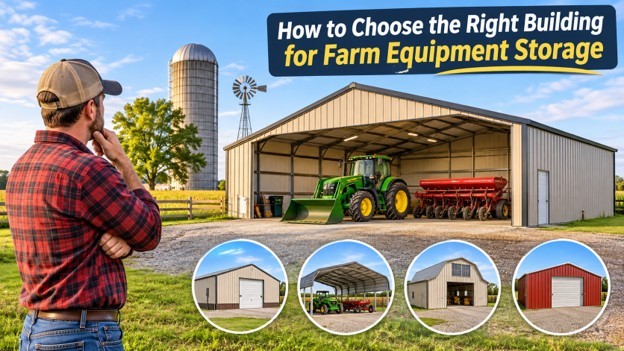
Some farm equipment is small, while some is large. Some harvesting tools can fit in a rack, while some need more space. The size and structure of farm equipment vary a lot, and it affects the choice of farm equipment storage buildings. The right structure is one that can house all the farm equipment, tools, and vehicles easily.
But considering equipment structure is not enough to find the right storage space. You need to think about many other factors for the best storage space. Don’t worry, we have curated crucial steps to choose a building that fits your farm's needs.
Which Farm Equipment Do You Want to Store?
If you make a list of all the farm equipment and tools you need to store, it becomes easy to imagine and analyze how much space is needed to store them. This is because different machines have different space requirements. Choosing any structure will not work well, as not all equipment can fit in.
We have described some of the most common farm equipment below; have a look:
● Tractors: Tractors are used for plowing, hauling, planting, and other field operations. But storing them needs more space, and it also depends on horsepower, cab height, tires, and attached loaders.
● Combine Harvesters: They are crucial equipment, used for harvesting crops. Ensure enough floor space to store harvesters; otherwise, their edges can bump into doors during entry and exit.
● Hay Balers: They collect and compress hay into round or square bales, but storing them needs extra care because their long frames and towing attachments get rubbed against the walls and doors.
● Planters and seed drills: This farm equipment has folding sections, while others require wider storage areas, thus needing to be stored carefully in an accessible location.
● Sprayers: Sprayers have boom width and folded dimensions. This is why, plan storage for them keeping their design in mind.
● Mowers and trailers: They are crucial equipment for farming because they help prevent congestion around larger machinery. So, plan for their storage carefully.
Scroll down to learn the steps on how to store these items carefully.
1. Measure Your Equipment Before Choosing Building Dimensions
So, whether you have the equipment discussed above or other equipment, start by measuring them all. This is because the largest machinery will determine the size of your storage building. If you are planning for a small building for now and want to expand it in the future, then choose a metal farm building, as it can be expanded easily because of prefabricated parts. Do not forget to include attachments, mirrors, exhaust stacks, loaders, and trailers where applicable while measuring.
Recommended Building Sizes for Farm Equipment
The following dimensions are general planning examples. Your actual requirements will depend on equipment size, quantity, and access space.
|
Building Dimensions |
Potential Storage Use |
|
20x30 ft. |
Size it suitable only a compact tractor, riding mower, small implements, and tools. |
|
30x40 ft. |
It's suitable only for a larger tractor, mower, trailer, and additional implements. |
|
40x60 ft. |
This size is good for multiple tractors, a hay baler, and agricultural equipment. |
|
50x80 ft. |
This size is mostly suitable for larger machinery, harvesting equipment, and multiple implements. |
|
60x100 ft. |
It's good for extensive machinery storage and a dedicated maintenance area. |
2. Choose the Right Door Width and Building Height
Don’t just think about the floor space. If you do so, equipment can get stuck while entering the building because you have not focused on the door size as per the largest equipment size. So, ensure the entrance is not too small.
To avoid this issue, follow the points below while deciding on the structure size:
● Door width: Always measure the widest sides of your equipment, including mirrors, tires, and attached implements.
● Door height: For the door height, consider cab roofs, exhaust pipes, warning lights, and other overhead components.
● Interior clearance: Check the interior clearance so you can store the equipment without hitting roof supports, lighting, or other parts of it.
● Turning space: Ensure there is enough room where equipment can move easily.
Virginia Cooperative Extension recommends at least 2 feet of additional door width and 1 foot of additional door height. And it's all beyond equipment dimensions.
3. Decide Between Open-Sided and Fully Enclosed Buildings
Building structure design can vary as per your needs for the storage. Some need open-sided for easy access, while other farmers need fully enclosed buildings.
● Open-Sided Buildings:
Open-sided buildings provide convenient access because of their design. They are good for providing natural airflow. Such structures are good for storing tractors, trailers, mowers, and other tools.
● Partially Enclosed Buildings:
As the name indicates, they are half-closed. These structures have open access with additional weather protection. Choose them when you want to protect valuable machinery while maintaining easy entry and exit.
● Fully Enclosed Buildings:
They are covered on all sides and have one or two doors. They offer greater protection to farm tools and equipment from wind, dust, and rain. The building is also suitable for enhanced security. Store your expensive machinery, tools, and equipment here.
4. Consider Ventilation, Moisture Control, and Flooring
Steel equipment storage buildings should remain dry and well-ventilated throughout the year. But as seasons change, their maintenance needs also change. Trapped moisture becomes the biggest issue; if the structure is made of wood, moisture causes expansion and contraction of the wood. Moreover, causes fungus growth. If it's steel storage, moisture accelerates the rusting of the building.
Follow the steps below, and you can avoid these problems:
● Roof ventilation: Proper ventilation helps release warm, moist air from inside the building.
● Sidewall openings: These openings support natural airflow, but always check local weather conditions.
● Proper drainage: It prevents rainwater from collecting around the structure and making it weak over time.
● Suitable flooring: Gravel or concrete can provide a stable surface. But choose the flooring after analyzing the site.
● Raised storage: Shelving and suitable platforms help keep tools and supplies away from ground moisture.
5. Plan Separate Areas for Equipment, Tools, and Maintenance
Separate areas for all types of farming stuff make it easy for you to access them and store them back safely. So, when planning Agricultural storage buildings, create separate areas for:
● Large machinery and tractors.
● Smaller implements and attachments.
● Hand tools and spare parts.
● Workbenches and repair equipment.
● Seasonal machinery and supplies.
But keep frequently used equipment near the main entrance so you can access it easily. Moreover, store fuel, pesticides, and other hazardous materials in a separate area in the storage building.
6. Check Building Materials and Local Weather Requirements
What material will be best for your metal buildings for farm equipment? Mainly, wooden, concrete, and metal buildings are used for storing farming equipment. The best material for you depends on several factors.
Here are the main factors that you should consider:
● Steel framing and panel specifications.
● Applicable wind and snow-load ratings.
● Roof design and rainwater drainage.
● Structural anchoring requirements.
● Ventilation and moisture-control options.
● Local building permits and zoning requirements.
If you live near areas with heavy rainfall, strong winds, or snowfall, ensure the structure is well-designed with professional engineers.
7. Allow Room for Future Farm Expansion
If you have plans to expand your farming business, you might need more equipment in the future. Installing different storage for the increased number of equipment is not a smart way. Choose a material whose structure can be expanded easily and meet your growing needs of equipment.
Before finalizing the dimensions, ask yourself:
● Will I purchase larger machinery in the next few years?
● Do I need additional space for trailers or attachments?
● Will I use part of the building as a workshop?
● Could I need a separate section for seasonal equipment?
But don’t go for an unnecessarily large space. It should balance your current equipment and realistic future needs. Also consider available land and budget.
Wrapping It Up:
Selecting the right equipment takes time. With the right approach, you can easily decide which structure can store your farming equipment effectively. Start with understanding your machinery and how you use it. Then measure all the large equipment that you want to store. Moreover, the door of the farm equipment storage building should allow easy entry and exit of the equipment. Do not forget to consider the weather conditions of your area where you want to install a building because many building features highly depend on it. And be ready to enjoy the best storage space for your farming business growth.

What's your reaction?
You may also like
-

Does Investing in Custom Packaging Actually Increase Repeat Customers?
-
9 Essential American Dream car Warranty Facts to Know
-
Why Tech Startups Need to Consider Flooding Prevention
-
Ultimate Top 15 Orthopedic Emergency Guide Emergency Room Near Me
-
What Is Agent Assist AI and How Does It Work?
-
7 Benefits of Integrating Access Credentials With Business Systems
















Comments
0 comment