




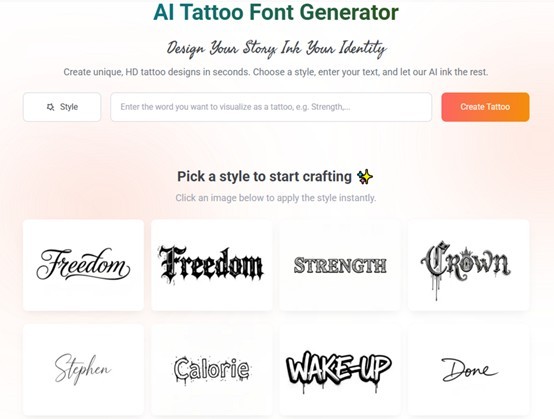
In the contemporary world of body art, there is a growing demand among women for designs that do not just sit on the skin but interact with the body's natural anatomy. For many, the goal is a tattoo that mirrors the delicate, organic growth of nature—specifically the winding, graceful movement of vines. However, a common frustration arises when searching for the perfect font: most traditional calligraphy options are far too heavy or blocky. They lack the "flow" required to wrap elegantly around a slender ankle or follow the gentle arch of a collarbone. To achieve this specialized "Vine-like" aesthetic, a modern tattoo font generator has become an indispensable tool for bridging the gap between rigid typography and organic human curves.
The Aesthetic Shift: From Static Text to Living Lines
Historically, script tattoos were often bold and flat. Today, the "Fineline" and "Botanical" movements have shifted the preference toward tattoos that feel light, airy, and interconnected with the wearer’s form. Women seeking memorial names, inspirational words, or dates now want those characters to sprout "tendrils" and "leaves," mimicking a living vine.
The primary pain point is the "Weight Issue." A standard script font downloaded from a general database often features thick downstrokes that feel "aggressive" rather than "organic." When placed on a delicate area like the collarbone, these heavy lines can overpower the natural beauty of the bone structure. By utilizing a specialized tattoo font generator, users can bypass these clunky defaults. The AI-driven design process allows for the creation of "Calligraphy Script" where the strokes are intentionally thinned and extended into graceful, vine-inspired flourishes.
Why Placement Dictates Design Choice
Placing a tattoo on a flat surface like the back or thigh is relatively straightforward. However, the ankle and collarbone are three-dimensional, curved, and bony.
- The Ankle Wrap: A tattoo here must "climb." If the font is too rigid, it looks like a bracelet that doesn't fit. It needs "ligatures"—the connectors between letters—that can be stretched and curved to follow the movement of the joint.
- The Collarbone Arch: This area requires a "Horizontal Flow." The script should mimic the natural sway of a branch. If the font doesn't have the right "slant," it ends up looking like a crooked line of text rather than an organic ornament.
A tattoo font generator offers the specific "Curvature Preview" needed for these placements. Instead of guessing how a word will look, the AI allows you to manipulate the "expressive weight" and "tail length" of the letters to ensure they wrap and flow without losing their legibility or aesthetic grace.
Designing the "Vine-Like" Look with Calligraphy AI
The secret to a successful vine-inspired tattoo lies in the "Growth Pattern" of the letters. It is about how the 'A' reaches toward the 'n' and how the final letter trails off into a delicate leaf-like flourish. Using a tattoo font generator, you can engineer this look through three primary design pillars:
1. Elongated Descenders and Ascenders
In botanical script, the parts of the letters that reach up (ascenders) or down (descenders) are treated as "tendrils." In the generator, you can select styles that emphasize these vertical reaches. The AI ensures that these extensions are not just straight lines but have a "sinuous" curve, mimicking the way a real vine reaches for sunlight.
2. Variable Line Thinning
Traditional calligraphy alternates between thick and thin lines. For a vine-like feel, you want the "Thin" to be the dominant feature. A high-quality tattoo font generator allows you to toggle the weight of the script. By choosing a "Light" or "Extra-Fine" weight, you create a design that looks like a delicate thread, ensuring it remains feminine and sophisticated.
3. Integrated Flourishes
A "vine" isn't a vine without its extra curls. Most standard fonts only allow for basic characters. A specialized generator, however, offers "Expressive Flourishes." These are artistic additions you can attach to the beginning or end of a word. You can find flourishes that look like budding flowers, swirling leaves, or thorns, allowing the text to transition seamlessly into a botanical piece.
Solving the "Insecurity" of the Design Process
Many women hesitate to get a script tattoo because they are afraid the final result will look "cheap" or "amateur." This fear is often justified if the tattoo artist is not a specialist in lettering. By using an AI-powered tattoo font generator, the user takes control of the design's "Expertise."
From an SEO and digital authority perspective (E-E-A-T), a tool like Refont provides the "Trustworthiness" required for a permanent decision. You aren't just looking at a pixelated image; you are generating a high-resolution, vector-ready stencil. This allows the user to see exactly how the "Vine-like" tendrils will look before they ever step into a studio. It turns a stressful decision into a creative, empowering experience.
Technical Considerations for Longevity
Organic, thin-line tattoos are beautiful, but they require technical planning to survive the aging process of the skin.
- The Spread Factor: Over time, all tattoo ink spreads slightly. If your "vines" are too close together, they will eventually merge. Use the generator to increase the "Kerning" (spacing) so each tendril has room to breathe.
- The Depth of Tone: Even for a vine-like look, the "spine" of the letter needs to be clear. Use the tattoo font generator to ensure that while the flourishes are thin, the main body of the letter has enough saturation to remain visible as the skin ages.
- Anatomical Mapping: When designing for the ankle, imagine the leg in motion. A vertical script that "twists" slightly is more resilient to the distortion of skin movement than a perfectly straight one.
A Step-by-Step Guide to Your Botanical Script
- Define the Sentiment: Choose a word that resonates with growth, nature, or personal evolution (e.g., "Bloom," "Rooted," "Grace").
- Filter for "Calligraphy" or "Handwriting": These categories offer the most "Organic Flow" potential.
- Adjust the Tendril Length: Use the tool’s customization options to extend the tails of the first and last letters. These will serve as the "anchor points" for your vine.
- Visualize the Curve: If the generator has a mockup feature, place the text on a wrist or ankle model. Look for how the negative space (the gaps between lines) creates a "lacy" effect on the skin.
- Export the Blueprint: Once perfected, download the high-resolution file. This is your professional stencil, ensuring the tattoo artist captures every delicate curve exactly as the AI intended.
The Future of Feminine Typography in Body Art
We are moving away from the era of "One Size Fits All" tattoos. The modern woman views her body as a curated gallery, and her tattoos should be as bespoke as her personal style. The integration of AI into the world of typography allows for a level of customization that was previously only available to those who could afford world-class calligraphers.
By leveraging a tattoo font generator, you are no longer limited by what is "available" in a shop's lookbook. You can design a piece that is uniquely yours—a script that grows with you, wraps around you, and reflects the organic beauty of your own story. Whether it’s a subtle vine on the collarbone or an intricate wrap around the ankle, let your ink be a testament to your grace and individuality.
Conclusion
A vine-inspired tattoo is more than just a decoration; it is a celebration of the body's natural lines. Don't settle for a font that is too heavy or a design that feels forced. Use the precision and creativity of an AI-driven tattoo font generator to craft a script that truly flows. By focusing on delicate weights, elongated flourishes, and anatomical harmony, you can ensure your next piece of body art is a masterpiece of organic elegance. Your skin is a canvas—make sure your font is as living and vibrant as you are.

What's your reaction?
You may also like
-

Why Small Roofing Problems Can Become Harder to Diagnose When Homeowners Delay Repairs
-
Planning a Stair Lift for Shared Homes Without Disrupting Everyday Staircase Use
-
Managing Household Waste During Large Decluttering Projects Without Creating New Clutter
-
How to Plan Impact Door Installation Around Security, Access, and Everyday Household Routines
-
How Commercial Roofing Maintenance Planning Helps Property Managers Track Roof Conditions
-
Designing Privacy Around Street-Facing Windows Without Giving Up Useful Natural Daylight












Comments
0 comment