




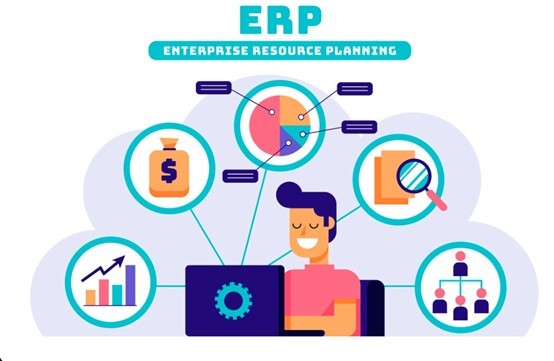
Picture this: it's month-end. Your sales team swears the numbers are clean. Your accountant is staring at a spreadsheet that says otherwise. Meanwhile, HR is chasing someone in inventory for a figure that payroll needed yesterday. Everyone is working hard. The business is losing time anyway.
Sound familiar? You don't have a people problem. You have a systems problem.
The question most growing businesses eventually ask is not "do we need better software?" The answer to that one is almost always yes. The real question is: what is the best ERP system for a company at our stage, with our budget, and without a six-month implementation nightmare attached?
This post gives you a straight answer.
First, What Should a Good ERP Actually Do?
The word "ERP" gets thrown around a lot, so let's be specific. A good ERP system should:
-
Connect your sales, accounting, inventory, and HR data in one place
-
Eliminate manual data transfers between tools (goodbye, CSV exports)
-
Give you real-time visibility into what your business is actually doing
-
Scale as you add locations, employees, or product lines
-
Be usable by non-technical staff without a three-day onboarding program
Most businesses outgrow their accounting tool before they realize they needed an ERP six months ago. The trigger is usually one of three things: hiring beyond 10 people, opening a second location, or spending more than four hours per week reconciling numbers across different systems.
Why Most ERP Options Are Not Built for Growing Companies
Here is the honest reality of the ERP market.
At one end, you have enterprise-grade platforms built for companies with dedicated IT departments and six-figure implementation budgets. These are powerful. They are also overkill for a company that just crossed 50 employees or is expanding into a new market.
At the other end, you have entry-level accounting tools that work brilliantly for freelancers and very small teams but fall apart the moment you need payroll, inventory, and sales data to talk to each other.
The middle ground, a genuinely integrated platform that is affordable, fast to set up, and built for businesses that are growing rather than already grown, is where most companies struggle to find something that fits.
What Makes Enerpize Different
This is where Enerpize enters the conversation. It is a cloud-based ERP platform built specifically for growing businesses, and the core premise is simple: instead of stitching together five separate tools and spending half your week making them talk to each other, you start with one system that already covers the majority of what you need.
Here is what that looks like in practice.
Seven Modules. One Data Layer.
Enerpize covers seven core business functions:
- Sales and CRM: Manage contacts, leads, quotes, invoices, and deal pipelines from the same place. A deal closed in CRM automatically becomes a sales order. No copy-paste. No duplicate entry.
- Accounting: Full double-entry bookkeeping with chart of accounts, journal entries, and financial reports. Your books stay current because the system updates them as transactions happen across every other module.
- Inventory: Real-time stock levels, warehouse management, and product variants. When a sale goes through, inventory adjusts. When stock hits a threshold, you know before it becomes a problem.
- Payroll and HR: Salaries, deductions, attendance, and payslips. Statutory compliance is built in, not bolted on as an afterthought.
- Purchases: Vendor management, purchase orders, and expense tracking that flows directly into your accounting records.
- Manufacturing: Work orders, production workflows, and material consumption for businesses that make what they sell.
- POS and Branches: Multi-location management under a single subscription, with branch-level reporting and centralized control.
The part that actually matters: all seven modules share one data layer. A transaction in one module reflects everywhere else in real time. There are no reconciliation loops, no duplicate records, no "which version of the spreadsheet is current."
The AI Features Are Actually Useful
Two AI capabilities ship with Enerpize, and they are worth mentioning because they solve a specific pain point that most finance teams know well: the time cost of processing supplier invoices and expense receipts.
AI Purchase Invoice Auto Matching works in three steps: upload the supplier invoice, the system extracts the line items, then semantically matches them against your product catalog, supplier database, and tax rules. You review and confirm. The AI handles the tedious part; your team makes the final call.
AI Expense Auto Matching does the same for receipts. Quick Mode can process up to 100 expenses in a single batch and auto-generates the journal entry. For any finance team spending hours per week on manual expense processing, including eCommerce MoR operational expenses, this is a meaningful reduction in overhead.
Neither feature operates as a black box. Every AI suggestion can be reviewed, adjusted, or overridden. The system assists; your team decides.
Pricing That Does Not Require a Finance Degree to Understand
Enerpize runs on tiered pricing across three plans: Basic, Advanced, and Premium. All plans are all-module inclusive, meaning you are not paying extra to unlock accounting or payroll separately. Add-ons are available for additional users, employees, branches, and warehouses as your business scales.
For a company comparing this against enterprise ERP alternatives that require custom quotes, multi-month implementations, and separate licensing for each module, the difference in total cost of ownership is significant.
Is Enerpize the Right ERP for Your Business?
If you are running a growing company with multiple moving parts and you are currently managing those parts across separate tools, the short answer is: it is worth checking.
The longer answer is that the best way to evaluate any ERP is to test it against your actual workflows. You can start a free trial here with no credit card and have a working environment set up within the hour. No installation. No lengthy onboarding. No sales call required before you can see the product.
If your immediate priority is getting your books in order before expanding into other modules, the accounting software capabilities are a logical starting point. Full double-entry accounting, financial reports, and integration with the rest of the platform from day one.
The Bottom Line
The best ERP system for your business is the one your team will actually use, that covers your core operations without requiring a dedicated IT department to maintain it, and that gives you room to grow without forcing a platform migration every two years.
For a lot of growing businesses, Enerpize fits that description. One platform. Real integration. Pricing that scales with you, not against you.
The spreadsheet holding everything together with formulas and optimism can finally retire.

What's your reaction?
You may also like
-

Why Small Roofing Problems Can Become Harder to Diagnose When Homeowners Delay Repairs
-
Planning a Stair Lift for Shared Homes Without Disrupting Everyday Staircase Use
-
Managing Household Waste During Large Decluttering Projects Without Creating New Clutter
-
How to Plan Impact Door Installation Around Security, Access, and Everyday Household Routines
-
How Commercial Roofing Maintenance Planning Helps Property Managers Track Roof Conditions
-
Designing Privacy Around Street-Facing Windows Without Giving Up Useful Natural Daylight










Comments
0 comment